
USB Connector Types Chart: A Comprehensive Guide
Navigating the diverse world of USB connectors requires a detailed chart․ This guide simplifies identification, detailing Type-A, Type-B, Mini, Micro, and Type-C variations for easy reference․
Universal Serial Bus (USB) standards have revolutionized data transfer and device connectivity since their inception․ Initially designed for peripherals like keyboards and mice, USB has evolved through several iterations – USB 1․0/1․1, 2․0, 3․0, 3․1, and 3․2 – each offering increased speed and functionality․
Understanding these standards is crucial when creating a USB connector types chart․ Different connector types, such as Type-A, Type-B, Mini-B, Micro-B, and Type-C, correlate with specific USB versions and capabilities․ A comprehensive chart must clearly delineate these relationships, including data transfer rates (e․g․, 480 Mbps for USB 2․0, 5 Gbps for USB 3․0) and power delivery specifications․
The emergence of USB Type-C marked a significant shift, introducing reversibility and enhanced power delivery, further complicating the landscape․ Therefore, a well-structured chart is essential for both consumers and professionals seeking clarity in this evolving technology․
USB Type-A Connectors
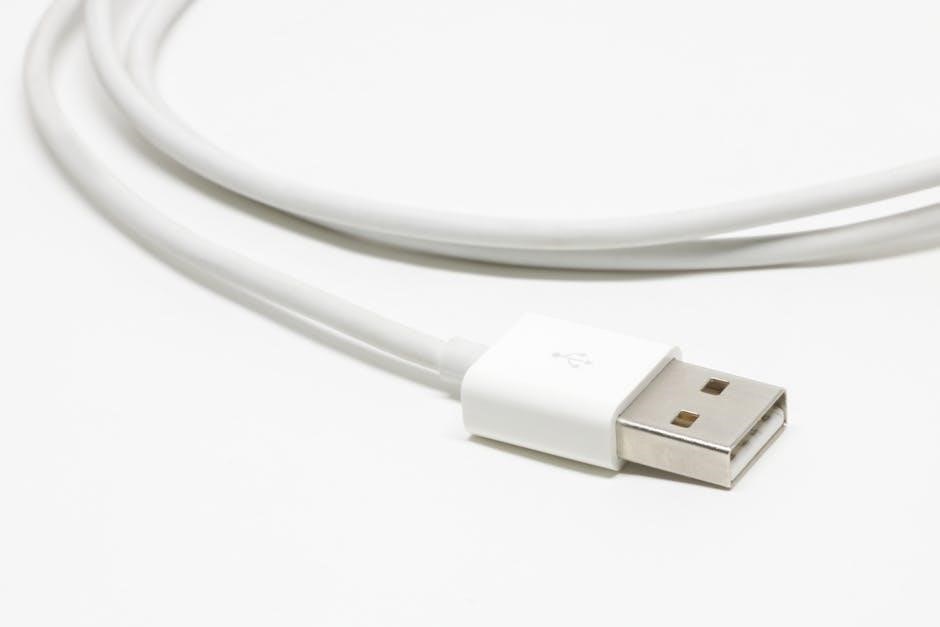
USB Type-A connectors are the most recognizable and widely used USB format․ Historically, they’ve been the standard for host devices like computers and game consoles․ A USB connector types chart must prominently feature Type-A, detailing its rectangular shape and four-pin configuration․
The chart should illustrate Type-A’s evolution through USB versions – 1․0, 1․1, 2․0, and 3․0/3․1/3․2 Gen 1 – noting the color-coding often used to differentiate speeds (e․g․, blue for USB 3․0)․ It’s vital to specify that Type-A is typically found on the ‘host’ side of connections․
Furthermore, the chart should highlight common applications, such as connecting keyboards, mice, flash drives, and printers․ Including images of various Type-A connectors will enhance clarity and usability for those referencing the chart․
USB Type-A: History and Evolution
USB Type-A’s journey began with USB 1․0 in the late 1990s, initially intended as a simpler alternative to parallel and serial ports․ A comprehensive USB connector types chart should reflect this origin․ USB 1․1 followed, improving speed and reliability․ The real leap came with USB 2․0, introducing the now-familiar high-speed data transfer․
The chart needs to illustrate the physical consistency of Type-A throughout these iterations, despite internal performance upgrades․ USB 3․0 (later rebranded as 3․1 Gen 1 and 3․2 Gen 1) brought SuperSpeed, often indicated by a blue insert․ Later versions, like 3․1 Gen 2 and 3․2 Gen 2, further increased speeds․
Highlighting these evolutionary steps on the chart, alongside corresponding data transfer rates, provides valuable context for understanding the Type-A connector’s enduring relevance․
USB Type-A: Common Applications
A detailed USB connector types chart must showcase the widespread use of USB Type-A․ Historically, and continuing today, it’s the dominant port on desktop computers and laptops, serving as the primary interface for numerous peripherals․
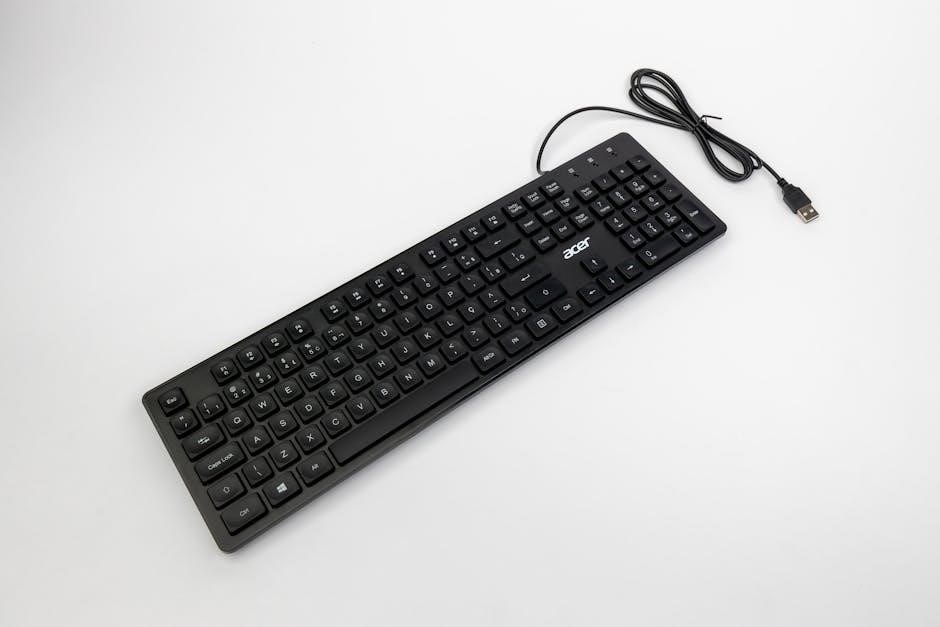
Common applications include connecting keyboards, mice, printers, and scanners․ It’s also frequently found on hubs, allowing expansion of available ports․ Flash drives almost universally employ Type-A, facilitating easy data transfer and storage․ Game controllers, webcams, and external hard drives also heavily rely on this connector․
The chart should emphasize its versatility․ While newer standards like USB Type-C are gaining traction, Type-A remains crucial for backward compatibility and continues to be a staple in countless devices, making its inclusion essential for a complete overview․
USB Type-B Connectors
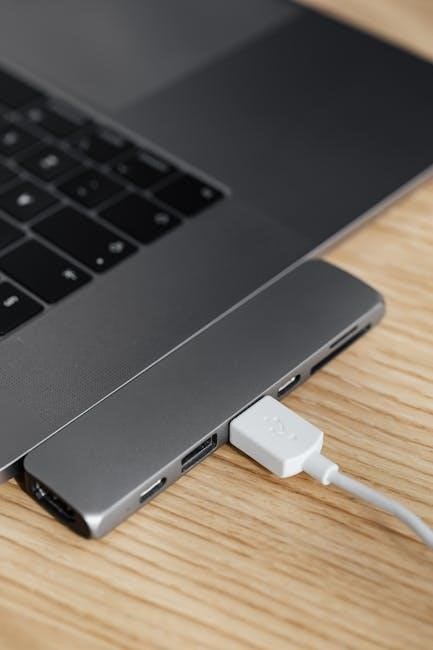
A comprehensive USB connector types chart needs to accurately represent USB Type-B connectors, historically used for connecting peripherals to computers․ Distinguished by their more boxy, squared-off design compared to Type-A, they were prevalent in older devices․
These connectors facilitated connections for printers, scanners, and external hard drives – devices benefiting from a more secure connection․ While less common now with the rise of Type-C, understanding Type-B is vital for legacy device compatibility․
The chart should illustrate the different iterations of Type-B, noting its availability in USB 1․0, 1․1, and 2․0 specifications, offering similar performance to Type-A․ Including a visual representation alongside its typical applications is crucial for clarity․
USB Type-B: Design and Features

A detailed USB connector types chart must highlight the distinct design of USB Type-B․ Unlike the rectangular Type-A, Type-B features a nearly square shape with slightly beveled edges, offering a more robust connection․
Its internal structure incorporates four pins, mirroring Type-A’s functionality but housed within a different form factor․ This design prioritized a secure fit, particularly important for larger peripherals like printers and scanners․
The chart should visually demonstrate the tapered top and squared-off base characteristic of Type-B․ It’s essential to note that while functionally similar to Type-A, the physical design prevents direct interchangeability, necessitating specific ports for each type․
USB Type-B: Typical Uses
A comprehensive USB connector types chart reveals USB Type-B’s primary applications․ Historically, it served as the standard connection for larger peripherals connecting to computers․
Printers were a dominant use case, providing a reliable link for data and control signals․ Scanners also frequently employed Type-B, benefiting from its secure connection․ These devices typically featured a Type-A port on the computer side and Type-B on the peripheral․
The chart should illustrate this common pairing․ While largely superseded by newer standards like Type-C, Type-B remains prevalent on older equipment․ Understanding its typical uses is crucial for identifying and troubleshooting connections on legacy devices․
USB Mini-Type B Connectors
A detailed USB connector types chart must include USB Mini-Type B, a connector vital during the early digital camera and smartphone eras․ Its compact size made it ideal for portable devices where space was limited․
The chart should highlight its trapezoidal shape, distinct from other USB types․ Initially supporting USB 2․0, it offered data transfer rates up to 480 Mbps․ Later iterations aimed to improve performance, though it was eventually superseded by Micro-USB․
Identifying Mini-Type B on a chart is essential for recognizing connections on older digital cameras, MP3 players, and some early smartphones․ Its inclusion provides a complete overview of USB evolution․
USB Mini-Type B: Specifications and Data Transfer Rates
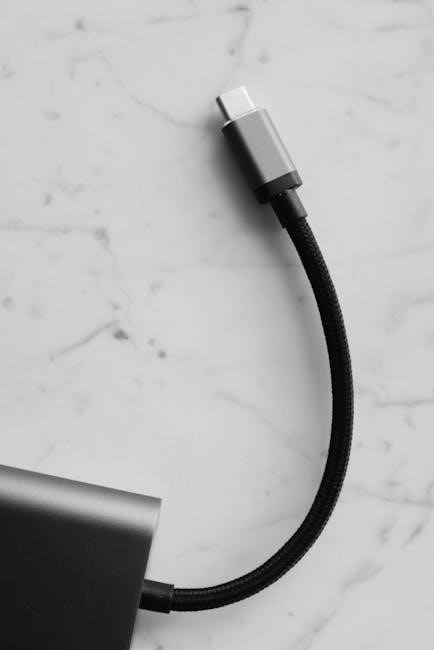
A comprehensive USB connector types chart detailing Mini-Type B must specify its core capabilities․ Predominantly associated with USB 2․0, it boasts a theoretical maximum data transfer rate of 480 Megabits per second (Mbps)․ This speed was sufficient for the devices it commonly connected, like digital cameras and older mobile phones․
The connector features four pins, supporting both data transfer and power delivery, typically up to 2․5 Watts․ While not as powerful as later USB standards, it adequately charged the devices of its time․ The chart should also note its physical dimensions, crucial for identifying it visually․
Understanding these specifications is vital when referencing a USB connector chart, providing a clear picture of its performance limitations and intended applications․
USB Mini-Type B: Devices Utilizing This Connector
A detailed USB connector types chart must illustrate the practical applications of Mini-Type B․ This connector was prevalent in a range of portable devices during the early 2000s, becoming a standard for digital cameras, enabling image transfer to computers․ Many older mobile phones, particularly those preceding widespread Micro-USB adoption, also utilized this port for charging and data synchronization․
Furthermore, Mini-Type B found use in MP3 players, external hard drives, and some older GPS devices․ Its compact size made it suitable for these portable electronics․ A comprehensive chart should visually represent these devices, aiding quick identification․
Recognizing these common applications is key when consulting a USB connector chart, providing context beyond just the physical connector shape․
USB Micro-Type B Connectors
A thorough USB connector types chart needs to clearly differentiate between the Micro-Type B variations․ Initially appearing with USB 2․0, this connector offered a smaller footprint than Mini-Type B, becoming dominant in smartphones and other portable devices․ The USB 2․0 version supported data transfer rates up to 480 Mbps and provided up to 2․5W of power․
Later, with the advent of USB 3․0/3․1 Gen 1 (often marketed as SuperSpeed USB), a revised Micro-Type B connector emerged, featuring additional pins for increased bandwidth – up to 5 Gbps – and enhanced power delivery, reaching up to 4․5W․ A useful chart will visually highlight these pin differences․
Understanding these distinctions is crucial when referencing a USB connector chart, ensuring correct cable and device compatibility․
USB Micro-Type B (2․0): Characteristics and Speed
A detailed USB connector types chart must specify the characteristics of Micro-Type B (2․0)․ This connector, recognizable by its small, rectangular shape, was widely adopted for its compact size, fitting into numerous mobile devices․ It features five pins and is often found on older smartphones, digital cameras, and MP3 players․
Regarding speed, Micro-Type B (2․0) supports a maximum data transfer rate of 480 Mbps, aligning with the USB 2․0 standard․ Power delivery capabilities are limited to 2․5W, sufficient for charging smaller devices but slower for power-hungry gadgets․
A comprehensive chart will visually depict the pin layout and clearly state these specifications, aiding in quick identification and compatibility checks․ Distinguishing it from the 3․0 version is vital․
USB Micro-Type B (3․0/3․1 Gen 1): Enhanced Performance
A robust USB connector types chart needs to detail the improvements offered by Micro-Type B (3․0/3․1 Gen 1)․ Visually distinguishable by its additional pins, this connector significantly boosts data transfer speeds․ It maintains the compact form factor but unlocks SuperSpeed capabilities․
Specifically, Micro-Type B (3․0) achieves a maximum data transfer rate of 5 Gbps – a substantial increase over USB 2;0․ Power delivery is also enhanced, reaching up to 4․5W, enabling faster charging for compatible devices․ The 3․1 Gen 1 specification is functionally equivalent to USB 3․0․
The chart should clearly illustrate the pin differences and highlight these performance gains․ Accurate representation is crucial for users needing faster data transfer or quicker charging solutions․
USB Type-C Connectors
A comprehensive USB connector types chart must dedicate significant detail to USB Type-C, the modern standard․ Its defining feature is reversibility – eliminating the frustrating “right-side-up” issue of older connectors․ This symmetrical design enhances usability for all users․
Beyond convenience, Type-C supports a wide range of protocols, including USB, DisplayPort, and Thunderbolt, offering versatile connectivity․ The chart should illustrate its 24-pin configuration and its ability to handle higher power delivery, crucial for charging laptops and other power-hungry devices․
Highlighting Type-C’s capabilities – data transfer speeds, power delivery wattage, and alternate mode support – is essential for a useful chart․ Today’s consumers rely heavily on this interface․
USB Type-C: Reversibility and Advantages
A detailed USB connector types chart must emphasize USB Type-C’s key advantage: its reversibility․ Unlike previous USB standards, Type-C connectors can be plugged in either way, eliminating user frustration and potential port damage․ This simple feature dramatically improves the user experience․
Beyond ease of use, Type-C offers increased durability due to its robust design․ The chart should visually demonstrate the symmetrical connector and its ability to withstand repeated insertions and removals․ Furthermore, Type-C supports higher power delivery, enabling faster charging for a wider range of devices․
Its versatility, supporting multiple protocols like DisplayPort and Thunderbolt, adds to its appeal, making it a truly universal connector․

USB Type-C: Power Delivery Capabilities
A comprehensive USB connector types chart needs to highlight USB Type-C’s significant power delivery (PD) capabilities․ Unlike older USB standards, Type-C with PD can deliver substantially more power – up to 100W or even 240W with the latest EPR standard – enabling faster charging for laptops, tablets, and other power-hungry devices․
The chart should illustrate how PD negotiates voltage and current levels between the power source and the device, optimizing charging efficiency and safety; This dynamic power adjustment is crucial for preventing damage to sensitive electronics․ Type-C PD also supports bidirectional power, allowing devices to both receive and supply power․
This feature enables functionalities like reverse charging, where a phone can charge a wireless earbud case, further showcasing its versatility․
USB Connector Speed Standards
A detailed USB connector types chart must clearly delineate the various USB speed standards․ Starting with USB 1․0/1․1 (12 Mbps), the chart should progress through USB 2․0 (480 Mbps), a significant leap for the time․ Then, illustrate the evolution to USB 3․0/3․1 Gen 1/3․2 Gen 1 (5 Gbps), branded as SuperSpeed USB․
Further clarification is needed for USB 3․1 Gen 2/3․2 Gen 2 (10 Gbps), known as SuperSpeed+ USB․ The chart should also include the newest standards like USB 3․2 Gen 2×2 (20 Gbps) and USB4 (up to 40 Gbps)․
Presenting these speeds alongside corresponding connector types (Type-A, Type-C) will provide a complete overview․ Including real-world examples of data transfer times for each standard enhances understanding․
USB 1․0/1․1: Original USB Specifications
A comprehensive USB connector types chart should begin with USB 1․0 and 1․1, the foundational standards․ USB 1․0, released in 1996, offered a low-speed data transfer rate of 1․5 Mbps, and USB 1․1, a subsequent improvement, boosted this to 12 Mbps․ These early versions primarily utilized the Type-A and Type-B connectors․
The chart should note that USB 1․0/1․1 were initially intended for peripherals like keyboards and mice, lacking the bandwidth for more demanding applications․ Power delivery was limited, typically around 2․5W․ While largely obsolete today, understanding these specifications provides historical context․
Highlighting the four-pin configuration common to both standards, and their limitations compared to later iterations, is crucial for a complete USB overview․
USB 2․0: Increased Data Transfer Rates
A detailed USB connector types chart must prominently feature USB 2․0, released in 2000, as a significant advancement․ It dramatically increased data transfer rates to 480 Mbps – a substantial leap from USB 1․1’s 12 Mbps․ This enabled support for more bandwidth-intensive devices like external hard drives and digital cameras․
The chart should indicate that USB 2․0 retained backward compatibility with earlier versions, utilizing the same Type-A and Type-B connectors, alongside the introduction of Mini-Type B and Micro-Type B for smaller devices․ Power delivery capabilities also saw a slight increase, reaching up to 2․5W․
Emphasizing USB 2․0’s widespread adoption and continued relevance, even with newer standards available, is vital for a comprehensive understanding of USB evolution․
USB 3;0/3․1 Gen 1/3․2 Gen 1: SuperSpeed USB
A comprehensive USB connector types chart needs to clearly delineate USB 3․0 (originally), 3․1 Gen 1, and 3․2 Gen 1 – all functionally equivalent, marketed as “SuperSpeed USB”․ These standards boosted data transfer rates to 5 Gbps, a significant improvement over USB 2․0․ The chart should highlight the characteristic blue color often used to identify USB 3․0 ports and connectors․
While initially utilizing the Type-A and Type-B form factors, USB 3;0 also saw increased adoption of the Micro-Type B connector, particularly in external hard drives․ Power delivery increased to 4․5W․ The chart should note the confusing naming conventions, as marketing shifted between versions․
Accurately representing these interconnected standards is crucial for clarity when creating a USB connector reference guide․

USB 3․1 Gen 2/3․2 Gen 2: SuperSpeed+ USB
A detailed USB connector types chart must distinguish USB 3․1 Gen 2 and 3․2 Gen 2, branded as “SuperSpeed+ USB”․ These standards doubled the data transfer rate to 10 Gbps, offering significantly faster performance․ The chart should clearly indicate this speed increase compared to previous generations․
This generation commonly utilizes the USB Type-C connector to fully realize its potential, though it can also be found with Type-A․ Power delivery capabilities also improved․ The naming scheme remains complex; USB 3․2 Gen 2 is essentially a rebranding of USB 3․1 Gen 2․

When constructing a USB connector guide, emphasize the increased speed and the common association with USB-C for accurate representation and user understanding․
Creating a USB Connector Types Chart (PDF)
Developing a comprehensive USB connector types chart in PDF format requires careful planning․ The chart’s primary goal is clear visual identification of each connector – Type-A, Type-B, Mini, Micro, and Type-C – alongside their respective speeds (USB 2․0, 3․0, 3․1, 3․2)․
Include images showcasing each connector’s physical appearance, highlighting key differences․ A table format is ideal, with columns for connector type, image, typical applications, and maximum data transfer rate․ Consider adding a section detailing the reversible nature of USB Type-C․
For wider distribution, saving the chart as a PDF ensures consistent formatting across different devices․ Tools like Adobe InDesign, Microsoft Publisher, or even Google Docs can be used for creation․
Information to Include in the Chart
A robust USB connector types chart necessitates detailed information for clarity․ Essential elements include high-quality images of each connector – Type-A, Type-B, Mini-B, Micro-B (both 2․0 & 3․0), and Type-C․ Alongside visuals, specify the USB version compatibility (1․0, 2․0, 3․0, 3․1, 3․2) and corresponding maximum data transfer speeds (Mbps/Gbps)․
Detail typical applications for each connector; for example, Type-A for peripherals, Micro-B for older smartphones․ Note the reversible functionality of USB Type-C․ Include power delivery capabilities where applicable․ A concise description of each connector’s physical characteristics – shape, size, pin count – will enhance understanding․

Tools for Creating a PDF Chart
Several software options facilitate creating a professional USB connector types chart in PDF format․ Microsoft Excel or Google Sheets are suitable for tabular data, easily exporting to PDF․ For visually rich charts, consider Adobe Illustrator or Adobe Photoshop, offering precise control over image placement and design elements․
Alternatively, user-friendly tools like Canva provide pre-designed templates and drag-and-drop functionality, simplifying the process․ Online diagramming tools such as Lucidchart or draw․io are also effective․ When finalizing, ensure the PDF is optimized for readability and accessibility, with clear labels and high-resolution images for accurate identification of each USB connector․